
• ABOUT US
    • THE EUROPEAN FEDERATION
    • MEMBERS
    • PARTNERS
    • CONTACT
  • HISTORY
    • THE PATHS OF SAINT JAMES IN EUROPE
    • EUROPEAN CULTURAL ITINERARY
  • ITINERARIES
    • UKRAINE
    • LITHUANIA
    • POLAND
    • NETHERLANDS
    • BELGIUM
    • FRANCE
    • CROATIA
    • ITALY
    • PORTUGAL
    • SPAIN
  • TOOLS
    • INTERACTIVE MAP
    • 360º VIRTUAL TOURS
    • AUDIOGUIDES
  • PROJECTS
    • LOCI IACOBI 1
    • LOCI IACOBI 2
    • CREATIVE LOCI IACOBI
  • NEWS
  • EVENTS
    • ESPAÑOL
    • FRANÇAIS
  • ABOUT US
    • THE EUROPEAN FEDERATION
    • MEMBERS
    • PARTNERS
    • CONTACT
  • HISTORY
    • THE PATHS OF SAINT JAMES IN EUROPE
    • EUROPEAN CULTURAL ITINERARY
  • ITINERARIES
    • UKRAINE
    • LITHUANIA
    • POLAND
    • NETHERLANDS
    • BELGIUM
    • FRANCE
    • CROATIA
    • ITALY
    • PORTUGAL
    • SPAIN
  • TOOLS
    • INTERACTIVE MAP
    • 360º VIRTUAL TOURS
    • AUDIOGUIDES
  • PROJECTS
    • LOCI IACOBI 1
    • LOCI IACOBI 2
    • CREATIVE LOCI IACOBI
  • NEWS
  • EVENTS
    • ESPAÑOL
    • FRANÇAIS
April 25, 2026 /  Members  /  Poland  /  Spain
The European Federation of Saint James Way participates in the II Economic Forum of Warmia (Poland)


The Way of St. James was represented in the II economic forum of Warmia (Warmia-Mazurian Voivodship, Poland) by the president of the European Federation of Saint James Way and director of Xacobeo, Ildefonso de la Campa Montenegro, who was part of the delegation that, led by the Confederation of Entrepreneurs of Galicia, participated in the event, held on 11 September in the district of Olsztyn, and that had as one of its highlights, the presentation of the Way of St. James as the First European Cultural Itinerary and engine of regional development.

The 2nd Warmia Economic Forum in Poland is a key platform to foster economic ties and discuss regional development. This event brings together business leaders and local authorities, such as the Marshal (governor) of the region, Gustaw Marek Brzezin, together with mayors from various cities of the Varmia and Masuria Voivodeship.

+ info:

https://ceg.es/es/actualidad/la-ceg-participa-en-el-ii-foro-economico-de-warmia
https://www.elcorreogallego.es/economia/2024/09/09/patronal-gallega-viaja-polonia-fortalecer-107944069.html


April 25, 2026 /  Members
Outstanding participation of the European Federation of Saint James Way in the 11th Edition of the Training Academy of the European Cultural Routes


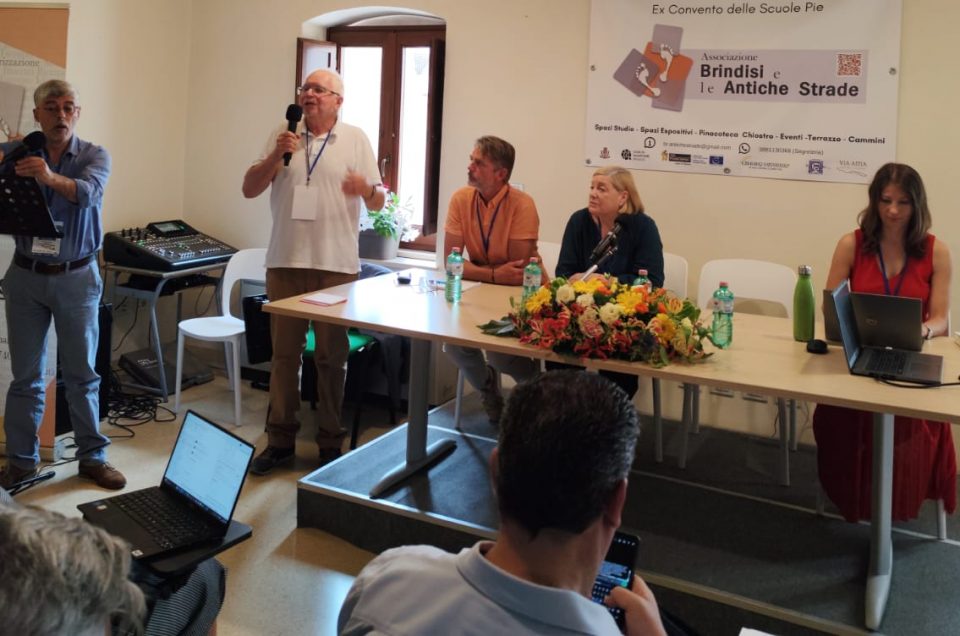
The European Federation of Saint James Way has played an important role in the 11th edition of the Training Academy of the European Cultural Routes, an event of great importance at European level held from 4 to 7 June in Brindisi, Italy, with the participation of the certified cultural routes.

Ildefonso de la Campa, President of the European Federation, took part as a speaker in the first panel of the day, called “Pedestrian Routes in the framework of the European Cultural Routes”. In this panel, he shared space with other relevant personalities such as Elena Dubinina, from Via Francigena; Hans Morten Løvrød, from Route of Saint Olav Ways; and Martine Campangne, from Saint-Martin of Tours Route. During his speech, de la Campa underlined the differences between Pilgrimage and Tourism, and the importance of the Way of St. James in the promotion of European values. He also presented the main challenges for the future and the strategies for the development of the Way of St. James in Europe.


The Federation was also represented by Catarina Chaves, representative of Vila Pouca de Aguiar, and secretary of the European Federation, in the working group on “Tourism”. In this working group, Chaves shared the session with personalities such as Matteo Nardin, from the European Travel Commission; Inger Harlevi, from The Hansa; and Miguel Ángel Martín Ramos, from European Routes of Emperor Charles V, among others. Among the topics discussed was the challenge of developing non-massified pilgrimage routes, based on the historical rigour and authenticity of the territories, in a globalised tourism context.

In addition, Pilar Gómez Bahamonde, director of the Fundación Camino Lebaniego de Cantabria, participated in the working group on “Sustainability”. In this group, Gómez Bahamonde shared reflections with experts such as Stefanie Bischof, from The Hansa; Angelofabio Attolico, from the region of Apulia; and Peter Backes, from the European Route of Industrial Heritage, among others. The “Steps for LIFE” project presented was chosen as an example of good practice for the conservation of ecosystems and endangered species along the Camino de Santiago in Portugal and Spain.

Partnership agreement with Via Francigena

In the framework of the Training Academy, the European Federation of Saint James Way and the Via Francigena signed an important collaboration agreement. This agreement aims to encourage the joint promotion of both European cultural routes, thus reinforcing their presence and relevance in the cultural and touristic field at continental level.

These interventions at the Training Academy are testimony to the Federation’s commitment to the promotion and development of the cultural routes, and its prominent role in discussions and debates at European level. Once again, the EFSJW has reaffirmed its position as a relevant actor in the preservation and dissemination of Europe’s rich culture.

Training Academy 2024

The Training Academy, which took place in Brindisi, Italy, from 4 to 7 June 2024, is an initiative organised by the European Institute of Cultural Routes  and in its 2024 edition by the European Association of the Via Francigena Roads, with the support of the Puglia Region and the City of Brindisi.

The theme of this edition was “European cooperation and sustainable development”, and was attended by representatives of 39 of the 47 Cultural Routes certified by the Council of Europe. The conclusions of the meeting can be consulted on the website of the Cultural Routes of the Council of Europe, highlighting their importance for the dissemination of European cultural routes.


April 25, 2026 /  Members  /  Ukraine
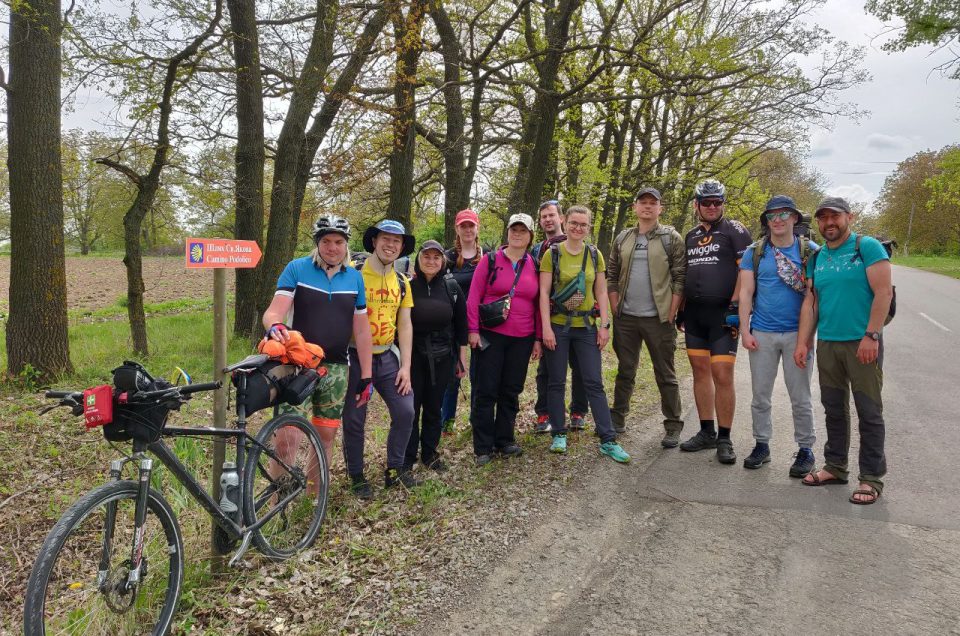
Ukrainian Camino resumed this spring after a two-year hiatus


The official season of the Saint James Way of Podillya (Camino Podolico) in Ukraine began on April 25. Pilgrims has already started walking and cycling the route, which has not officially functioned since 2022 due to Russian aggression.

Camino Podolico is a cultural and pilgrimage route from Vinnytsia to Kamianets-Podilskyi through the town of Bar, modeled after the Saint James Ways, which pass through the whole Europe. The route was launched in test mode thanks to the support of the Ukrainian Cultural Foundation in 2021 and become a member of the European Federation of Saint James Way in June 2023.

Due to the full-scale war of the Russian Federation against Ukraine, the organizers were unable to open the official season, which was supposed to start in the spring of 2022, and postponed the launch indefinitely. The main reason was the large number of shellings and the overcrowding of temporary residences with internally displaced persons. But despite all the warnings, several dozens of people during these two years still went on hiking and cycling trips, getting to know the beauty and hospitality of Podillya. Organizers constantly received requests from those willing to walk the route, in particular, from veterans and family members of the military servicemen.

«Since the end of last year, we have been preparing for the full functioning of the route with all the necessary information support and infrastructure. Together with all the coordinators from the communities of the Camino Podolico Way we have managed to start the season from April 25, as it was originally intended. After all, a lot of people write to us that they plan to spend a vacation on the route as a small retreat for psychological recovery in war conditions», – says the director of the Department of City Marketing and Tourism of Vinnytsia City Council Oleksandr Vesheleni.

On the website www.caminopodolico.net, in the Route section, information about places where one can eat and stay for the night has already been updated: apartments, hotels, hostels, rural houses, etc. The organizers emphasize that accommodation must be booked in advance at all stops and a reserve should be sought in case of full occupancy of one or another establishment. Staying outdoors at night is prohibited due to curfew from midnight till 5:00 AM.

As for security issues, some general recommendations for the safety of pilgrims as well as the list of all the shelters in communities are available on the Camino Podolico website. The recommendations include: always have ID and pilgrim’s passport during walking; do not come close to or and take pictures of the regime facilities (such as air defence systems, hydroelectric power plants etc.); use the “Air alert” app to know if there’s any threats in the region; if there is an air raid – move to shelters and stay away from the glass.

Despite the difficulties, the Camino Podolico route has been successfully launched on April 25, and during the first month 26 people have already passed the route. In addition to that, this year Camino Podolico team is working on alternative branches and some continuations which will connect the route with other countries and marked sequences. A special highlight of this year is the route leading to the only functioning church and spring of St. James in Podillya region, which is located approximately 30 kilometres from Kamianets-Podilskyi in the village of Panivtsi of Ternopil oblast. On April 27-28 a first group consisting of 15 people walked along this part of the route and visited the villages of Zavallia, Panivtsi, Rykhta and Zhvanets. The participants found out some interesting facts about the history of each community and also visited a unique cave “Atlantis” in Zavallia. The highlight of the trip was a visit to the Sunday holiday service in the Church of St. James in Panivtsi village, as well as the conversation with the abbot of the church – father Ihor, who has been serving there for more than 30 years.

This part of the route is currently being organized, and soon the official website www.caminopodolico.net will have detailed information on how to plan the new section of the Camino Podolico on foot or by bike.

Check out the image gallery of the Camino Podolico!


April 25, 2026 /  Members  /  Portugal
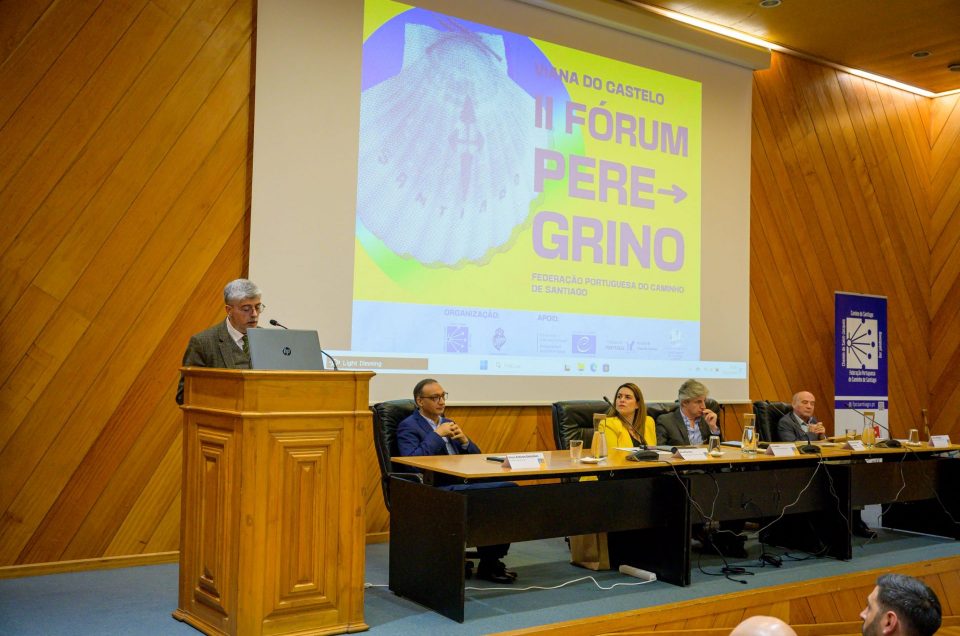
The European Federation of Saint James Way participates in the II Pilgrim Forum in Viana do Castelo


The II Pilgrim Forum, held on May 16 and 17 in Viana do Castelo, counted with the participation of the European Federation of Saint James Way. Organized by the Portuguese Federation of Saint James Way and the City Council of Viana do Castelo, this event brought together pilgrims’ associations, municipal authorities, religious entities and representatives of civil society to discuss the future development of the Pilgrims’ Routes to Santiago in Portugal and Europe. Among them were the president of the European Federation of Saint James Way, Ildefonso de la Campa Montenegro, and the representative of the Council of Europe, Eladio Fernandéz-Galiano, who shared their vision and experience on the subject.

A meeting to discuss the future development of the Pilgrims’ Roads to Santiago in Portugal and Europe

During the forum, which took place in the Municipal Library of Viana do Castelo and in the Dr. Francisco Sampaio Auditorium of the School of Technology and Management of the Polytechnic Institute of Viana do Castelo (ESTG-IPVC), several strategic issues for the development of the Way of St. James, both in Portugal and in Europe, were addressed. From the certification of the Way as the first Cultural Route of the Council of Europe to the challenges faced by municipal authorities in its management, the event was a platform for the exchange of ideas and experiences among participants.

Showcasing the importance of the Way of St. James as a European cultural heritage of great relevance, the forum was attended by leading national and international experts. In addition to the conference sessions and round tables, the event also included practical activities, such as a certified training day for professionals in the tourism sector. The documentary “Nuestro Camino” (Our Way) and the book “Caminos que hago míos” (Roads I make my own) were also presented, offering attendees a deeper insight into the rich history and culture of the Camino de Santiago.

The attendees agreed in highlighting the success of the Forum, which is consolidated as a meeting and reflection space for all the actors involved in the promotion and development of the Way of St. James in Portugal and throughout Europe.

Check all the information about the II Pilgrim’s Forum on the website of the Portuguese Federation of the Pilgrims’ Roads to Santiago www.fpcsantiago.pt/eventos


April 25, 2026 /  Members  /  Portugal  /  Spain
The European Federation participates in the intermediate meeting of the European Cultural Routes Program


The European Federation participates in the intermediate meeting of the European Cultural Routes Program

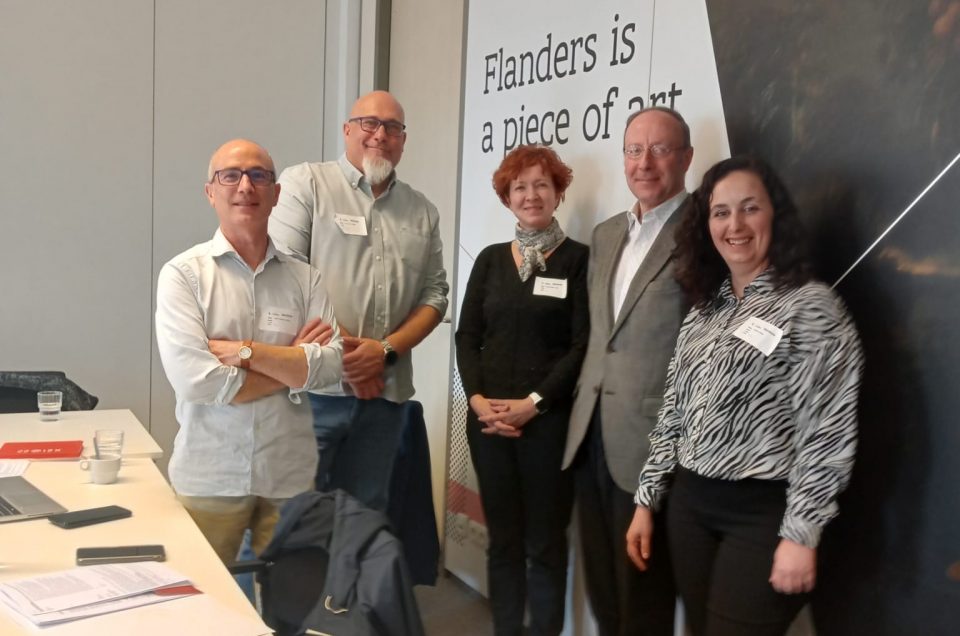
The European Federation of Saint James Way participated in the intermediate meeting of the European Cultural Routes Program of the Council of Europe, which was held on March 19 and 20 in Brussels. The Federation was represented by its partners from the Xunta de Galicia (Xacobeo, Spain), the Portuguese municipality of Vila Pouca de Aguiar, which also represented the Portuguese Federation of the Way of St. James, the Fundación Camino Lebaniego (Spain) and Turismo de Pula (Croatia).

In addition to analyzing the current situation and plans of the Working Groups (sustainability, tourism and cooperation), the discussion focused on exploring the development of projects with European funding among the cultural routes and the possibility of redirecting the efforts of the group, after a year of work, towards a more active cooperation among the networks of cultural routes through concrete initiatives.

Reviewing and improving communication between the routes was also another of the points discussed at the meeting. In this regard, the attendees discussed how to involve the members of the routes in transnational cooperation and working groups both between the routes and between the route managers and their members.

The meeting also included a preview of the agenda for the next Training Academy, which will be held from 4 to 7 September in Brindisi.


April 25, 2026 /  Members  /  Portugal  /  Spain
Consultant for the Council of Europe on a technical visit to the Camino de Santiago in Galicia and Northern Portugal


Mike Robinson was received by the Presidency and Secretariat of the European Federation of Saint James Way (respectively the Xacobeo Foundation and the Vila Pouca de Aguiar City Council), from 19th to 23rd November.

The classification of the Camino de Santiago as a European Cultural Route, 36 years ago, was the starting point for the creation of the Council of Europe’s Cultural Itineraries Program, which now has more than forty thematic routes throughout Europe. The certification process requires periodic reassessment by the Council of Europe, and it is necessary to present evidence of the dynamism, cooperation and sustainability of each route, in relation to the basic values of the European Community.

The Advisor responsible for evaluating the renewal of the title of European Cultural Route, Professor Mike Robinson, has now come to the field to check the development of the Camino de Santiago in Galicia and Northern Portugal.

“There is an international public perception that the phenomenon of the Camino de Santiago essentially involves Spain and France, a perception that it is urgent to extend to other countries, such as Portugal, where the territories along the pilgrimage routes hide real pearls, whether in the landscape , architectural heritage or traditional gastronomy, and which can only truly be experienced and felt, in «slow tourism» mode, by pilgrims on the way to Santiago de Compostela”, highlighted Mike Robinson.

Two days in Galicia: the “Camino del Norte” and the “Camino Primitivo”

The first day, November 20th, began in Santiago de Compostela. Ildefonso de la Campa, Director of Xacobeo (Galician Government) and President of the EFSJW, hosted Professor Mike Robinson in Galicia. Ildefonso de la Campa highlighted the importance of networking, within the European Federation of the Camino de Santiago, and the responsibility of ensuring, among all network entities, the connection between the various Saint James Ways in Europe, so that pilgrims can find security, support and quality, benefiting from the territories crossed from the point of origin to Santiago de Compostela.

A meeting was held at Monte do Gozo, a symbolic place where public and private pilgrim hostels coexist, followed by a visit to the International Pilgrim Reception Center, run by the Church of Santiago, the iconic place where pilgrims collect the ‘Compostela’ certificate and may enjoy meeting spaces and a chapel.

The group then traveled to the North Way, where meetings were held with technicians in charge of maintaining the pilgrimage route, associations of friends of the Camino and representatives of public entities. There was also the possibility to visit the Mondoñedo Cathedral, a public pilgrim hostel and the Camino del Norte Interpretation Center. The dinner, back to Santiago de Compostela, allowed networking with various authorities and experts from the International Committee of Experts on the Camino de Santiago.

The second day of the visit began at the Primitive Way with several sections of the pilgrimage route, with special interest in the ruins of Soutomerille. Meetings with maintenance technicians and the President of the Association of Friends of Saint james Way in Lugo were also fruitful. The public pilgrim hostel in Lugo and the Camino Primitivo Interpretation Center were also included, before celebrating lunch with local and regional authorities.

The historic pilgrimage routes in Northern Portugal

With a new day came new paths, in a new country. After visiting Galicia, the representative of the Council of Europe for Cultural Itineraries had the opportunity to discover the Portuguese Interior Saint James Way, between Vila Pouca de Aguiar, Santa Marta de Penaguião and Lamego, visiting parts of the route, monuments, viewpoints and pilgrim hostels, mostly in old rehabilitated primary schools – an aspect that was highly valued.

Ana Rita Dias, Vice-President of the Municipal Council of Vila Pouca de Aguiar, currently presides over the Portuguese Federation, with Vila Pouca de Aguiar also serving as Executive Secretary of the European Federation, since 2021. The President of the Portuguese Federation of Saint James Way, therefore, played the role of hostess the visit.

Ana Rita Dias emphasized: “For the Board of Directors of the Portuguese Federation it was very enriching to have the opportunity to meet with Professor Mike Robinson, to personally present the various historical routes in Portugal, the reality of each associated, whether municipality or jacobean voluntary association, the work that is being carried out and planned for the future, as well as the challenges in recognizing and disseminating the Camino de Santiago in Portugal.”

She also highlighted that “the Camino de Santiago is a European Cultural Route of excellence, a reference for all other classified routes, as it directly highlights the values of the Council of Europe, such as the union and exchange of experiences between different cultures, social justice or peace, so fundamental in the current international context”.

The technical visit program also included moments of contact with pilgrim associations at the Vairão Monastery, on the Central Portuguese Saint James Way, and revealed several investments that are being made on the Costal Portuguese Saint James Way, on the route between Porto and Matosinhos.

The Consultant shared, with municipalities, associations and local agents, relevant recommendations on the management of pilgrim flows and the importance of interpreting heritage, be it cultural, natural, scenic or intangible.

The result of the evaluation will be known next year at the European Cultural Routes Forum, which will take place in Hungary.


April 25, 2026 /  Members
The Way must go on: how a grant from the EU and the Council of Europe helped restore the Camino Podolico route


Thanks to a grant from the European Union, the Council of Europe and the European Commission, the project “The Way must go on” was implemented in Vinnytsia and Khmelnytskyi regions. As part of it, it was possible to research and promote the Camino Podolico route thanks to the gastronomic component. As a result, a gastronomic catalog of the route was published, as well as a series of videos, and the communities of the route joined the European Heritage Days for the first time.

The Saint James Way of Podillya (Camino Podolico) is a cultural and pilgrimage route from Vinnytsia to Kamianets-Podilskyi created in 2021 with the prospect of joining the European Federation of Saint James Way. Its drivers are the communities of Vinnytsia, Bar, Kamianets-Podilskyi and other 8 communities of Vinnytsia and Khmelnytskyi regions.

This route was launched despite the challenges of the pandemic, but in 2022, due to the military aggression of Russia, it had to be put on hold – primarily for security reasons. Despite this, several dozens of travelers completed Camino Podolico even during martial law. And the initiators of the creation of the route – local administrations, activists, representatives of various institutions – continue to consider it to be a powerful factor in uniting communities for the sake of preserving and popularizing history, culture, tourism and recreation in their territory, and show great interest in the development of the route.

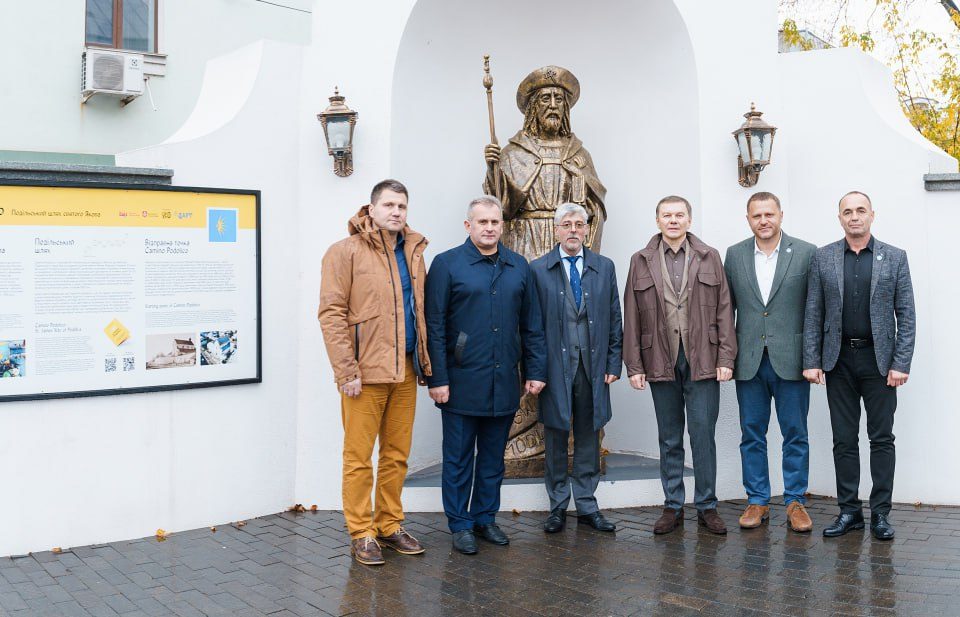
In order to preserve the potential and give communities the opportunity to develop, the team of the department of city marketing and tourism of Vinnytsia City Council is actively continuing work on the project. In June of this year Vinnytsia as the coordinator of the Camino Podolico route was unanimously accepted to the European Federation of Saint James Way, which opened new possibilities for international cooperation. Also, in the summer, a sculpture of Saint James – the symbolic starting point of Camino Podolico – was consecrated in Vinnytsia. And thanks to grant support from the European Union and the Council of Europe it was possible to implement a project “The Way must go on” – expeditions to research and document the local intangible heritage: gastronomy, local legends and customs, history of monuments and their owners along the entire Saint James Way of Podillya route.

Thanks to a number of activities, communities received an incentive to develop, work with tourists, build basic infrastructure, and most importantly – protect and develop local heritage.

The taste of the Podillya Way

The result of several months of work of the project team, together with researchers and experts, was the release of a gastronomic catalog and videos about the gastronomic heritage of 11 communities of Camino Podolico, as well as publications and popularization of the route in the national media.

The gastronomic catalog includes 22 recipes of authentic dishes of Podillya both in Ukrainian and in English. With a list of places on the Camino Podolico where these dishes can be tasted, travelers will be able to taste Podillya and thus immerse themselves more deeply in the culture of the region. Among the dishes are cherry borscht and stuffed chicken necks from Vinnytsia, tripes from the stomach of a young calf from Voroshylivka (near Hnivan), pickled cucumber stew from Brailiv, varenyky with cherries in jelly and stuffed pike from Zhmerynka, cabbage rolls with pork ribs from the time of Queen Bona and milk jelly from Bar, white borscht from Maliivtsi and many other interesting dishes of local Podillya cuisine.

Living heritage

At the same time, workshops were held in the communities of Vinnytsia and Khmelnytskyi regions, located on the tourist route, to start European Heritage Days there. As a result, 6 communities on the Camino Podolico route joined in the celebration of EHD.

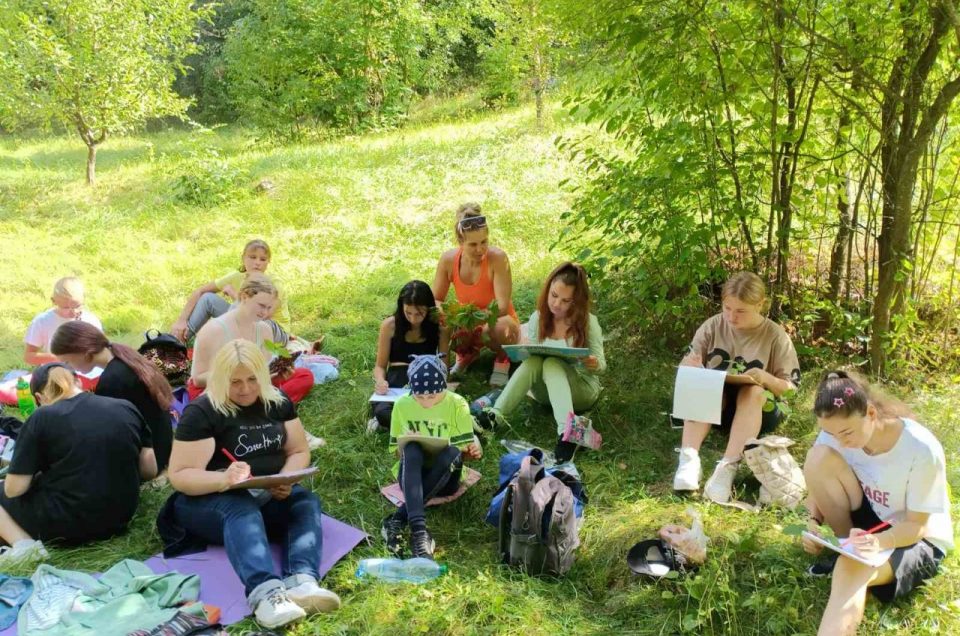
For example, in the village of Shchitky of the Vinnytsia community, workshops were held dedicated to cattail weaving, the traditions of which are included in the list of intangible cultural heritage of Ukraine. In Kamianets-Podilskyi, the ancient local dance “Varvarka” was recreated with a gastronomic fair where the traditional dishes of Podillya cuisine were prepared. Excursions for children were organized in Vinkivtsi, where they were told about the historical past of the region, helped to explore typical plants of the area and create botanical illustrations. In Dunaivtsi, local craftsmen participated in the EHD and held a series of events with excursions and workshops: on Easter eggs painting, making souvenirs and pictures from feathers, drying plums, woodcarving, traditional pottery, etc. In Zinkiv, the peculiarities of the intangible cultural heritage elements were investigated: ceramics, decorative painting, Easter eggs painting and the Zinkiv shirt, followed by the production of printed products, which can become a souvenir-hallmark of the village. And in the city of Bar, visitors of the local library were involved in creating a series of puzzles with photos of historical monuments of the region – “Seven Wonders of Bar region”.

All these activities made it possible to present the cultural life and heritage of the communities of Vinnytsia and Khmelnytskyi regions, which are in the rear, as a powerful resource for preserving identity and using it for the purposes of public dialogue, economic growth and promotion of the values of united Europe, which is especially relevant in the context of this year’s EHD theme “Living Heritage”. Such activity and inclusion of communities once again confirms that Ukrainians in the current conditions continue to fight for the preservation of their history and cultural identity.

Also, thanks to the expeditions during the project “The Way must go on”, problematic issues and ways to solve them were worked out. And in the vast majority of communities, communication has been renewed and new coordinators of the Camino Podolico route have been chosen. The communities themselves expressed their intention to resume the functioning of the route in the next season, and in addition, despite the challenges of today, to deepen the knowledge of their residents (in particular, displaced persons who found shelter there) and residents of other regions about history and local traditions.

The material is published as a part of the grant project “The Way must go on” implemented by the department of city marketing and tourism of the Vinnytsia City Council with the support of the European Union and the Council of Europe.

The views expressed herein can in no way be taken to reflect the official opinion of the European Union or the Council of Europe.

The gastronomic catalog

Videos about the gastronomic heritage


April 25, 2026 /  Members
The President of the European Federation of Saint James Way visited the communities of Camino Podolico in Ukraine


The president of the European Federation of Saint James Way Ildefonso de la Campa Montenegro visited six communities of Saint James Way of Podillya: Vinnytsia, Hnivan, Bar, Zinkiv, Maliivtsi and Kamianets-Podilskyi.

Mr. de la Campa stayed in Ukraine from October 31 to November 3. His trip was dedicated to the cultural and pilgrimage route Camino Podolico, which this year was officially accepted into the European Federation of Saint James Way. He emphasized the importance of supporting Ukraine as a member of the Federation, which fights for the values of the entire civilized world.

«Today, a part of the Saint James Way, a country through which the Saint James Way runs, is fighting to defend and maintain the signs that define it as a European, free and democratic society. The European Federation of the Saint James Way and the administrations that represent it have already expressed and express their support to the struggle of the Ukrainian people for their freedom, sovereignty and independence in the face of the unjustified war of aggression of the Russian Federation. In this struggle you are not alone. Your heroic resistance is the first retaining wall against intolerance, aggression, the imposition of the strongest and violence as state policy… The Saint James Way are the veins through which our blood flows and mixes, and today, in Europe, Ukrainian blood is watering a future of freedom, democracy and peace», – said Ildefonso de la Campa Montenegro.

Cooperation to develop and popularize the Saint James way in Ukraine.

The main event during the visit of the President of the Federation to Ukraine was the signing of the Memorandum of cooperation to develop and popularize the Saint James way in Ukraine. Mayors of Vinnytsia, Hnivan, Bar and Kamianets-Podilskyi took part in the signing. The document is open, so the representatives of other Ukrainian communities and organizations who are willing to develop the pilgrim routes of the Saint James way in Ukraine are welcome to join.

All the signatories emphasized that for Ukrainians (civilians and veterans), walking the path during the war and post-war period can become an effective way of psychological recovery, reinterpretation of trauma and search for new meanings, because the popularity of the Camino in the world is largely determined by the desire of people to change their rhythm of life, gain a new experience of self-immersion and spiritual practices (regardless of religion or worldview).

In total, the head of the Federation visited three communities each in the Vinnytsia and Khmelnytskyi regions on the way of the Camino Podolico. In Vinnytsia he visited Castle Hill and the oldest city churches of the 17th-18th centuries, got acquainted with the exhibition “Under the Protection of the Defenders” in the Artynov Tower. He also met the abbot of the starting point of Camino Podolico – Church of the Blessed Holy Virgin Mary of Angels Józef Chromy. In Hnivan, the guest attended a service in the sanctuary of St. Joseph, and in Bar went to the folk museum of Bar ceramics and walked near the main sights of the city.

The President of the Federation also visited the wooden church of St. Michael the Archangel and the remains of the Zinkiv fortress, and the Orłowski estate in Maliivtsi. At the end of the intense program in Kamianets-Podilskyi, he was awaited by a city tour with a visit to the fortress and a meeting with the bishop of the Roman Catholic Church, Leon Dubrawski.

During the meetings with representatives of municipalities, religious communities and public organizations, he discussed the perspective of international cooperation, the preparation of joint grant applications and the holding of events dedicated to Europe Day and European Heritage Days in 2024. The President of the Federation also witnessed the first results of the project “The Way must go on”, aimed at studying and popularizing the gastronomic heritage of the route.

While sharing his impressions of the trip, Ildefonso de la Campa noted that he saw in Ukraine an example of strong and effective cooperation between municipalities, as well as an active civil society that, even in wartime, works to preserve its own heritage, strengthen European identity, and build a democratic dialogue through culture and tourism. All this, according to the president, is the key to the successful development of such cultural routes of the Council of Europe as the Saint James Way.


April 25, 2026 /  Belgium  /  France  /  Italy  /  Lithuania  /  Members  /  Netherlands  /  Poland  /  Portugal  /  Spain
The European Federation adds six new members from Croatia, Italy, France and Spain


The Extraordinary General Assembly, held on 12 and 13 October in Torun, ratified its new statutes, with the aim of making it more open and efficient.

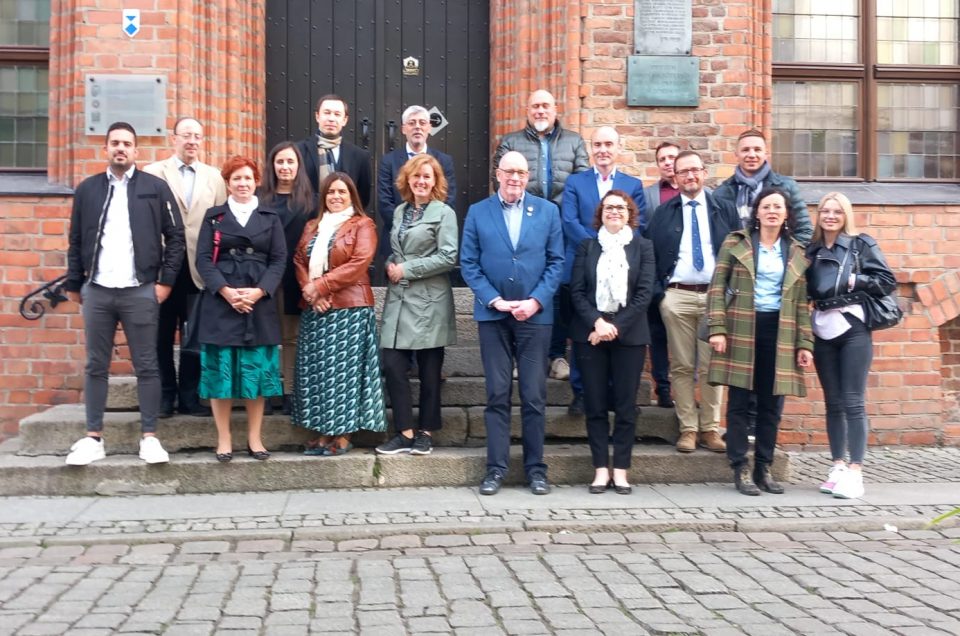
The European Federation of the Pilgrims’ Routes to Santiago is growing and incorporates six new members: the municipalities of Å ibenik and Dubrovnik, and the Tourism Cluster of South Istria, all of them in Croatia, together with the municipality of Pistoia (Italy), the French Agency of the Pilgrims’ Routes to Santiago (ACIR Compostelle) and the Association of Municipalities of the Pilgrims’ Route to Santiago in Spain (AMCS). A significant agreement, which was made formal during the Extraordinary General Assembly of the Federation, held on 12 and 13 October in Torun (Kujawsko-Pomorskie, Poland).

The Assembly ratified the modification of the Federation’s statutes, with the aim of making it more open and efficient, allowing the incorporation of new members (up to a maximum of six organisations per country) and extending the term of office of its officers to four years.

The meeting was attended by representatives of the Federation members: Galicia, Asturias, Cantabria (Spain), Vila Pouca de Aguiar and the Portuguese Federation of Saint James Way (Portugal), South Limburg (Netherlands), Lithuania, Winnica (Ukraine), the hosts: Regional Government of the Kujawsko-Pomorskie Region, and distinguished guests. The Extraordinary General Meeting is held in the framework of the celebration of the 550th anniversary of the birth of Nicolaus Copernicus – the creator of the heliocentric theory, born in ToruÅ„.

Objectives: to incorporate new members and to intensify the activities for the promotion of the Pilgrims’ Roads to Santiago.

The most important decision taken by the General Assembly was the modification of the Federation’s statutes. The members agreed to extend the term of office of the authorities (president, manager, secretary, treasurer) to 4 years. The Federation intends to always be open to new members, and it was also decided that a country can represent a maximum of six organisations.

It was also discussed the need to intensify the promotional activities of the Pilgrims’ Routes to Santiago, organising events and obtaining EU funds for development, especially for infrastructures.

Along these lines, the president of the Federation, Ildefonso de la Campa Montenegro, stressed the need to be more dynamic and efficient, reasons which, as he pointed out, motivate the changes in the statutes. -Our organisation needs a fresh look and new projects that contribute to the promotion of the Pilgrims’ Routes to Santiago, objectives that are in line with the advice and recommendations of the Cultural Routes of the Council of Europe. I count on the initiatives of the newly admitted members and on working together to put them into practice,” he stressed.

On the welcoming day, Piotr CaÅ‚becki, Marshal of the host Region expressed his pleasure at welcoming the delegation to the DÄ…mbski Palace in ToruÅ„ – We wanted to organise the General Assembly in Kujawsko-Pomorskie for two reasons. Firstly, on the occasion of the 550th anniversary of the birth of Nicolaus Copernicus, as we believe that the promotion of the idea of pilgrimage along the Ways of St. James corresponds perfectly with the legacy of the Great Astronomer. Secondly, it is an opportunity to present our activities on the Polish Way and the touristic values of our Region, he said.

The meeting in ToruÅ„ was also an opportunity to present the activities of the Pomeranian Region in the field of the Pilgrims’ Routes to Santiago, which intends to join the Federation next year. The delegates also agreed that the next General Assembly will be held in June 2024 in Santiago de Compostela.


April 25, 2026 /  Lithuania  /  Members
The European Federation participates in the international conference celebrating the 10th anniversary of the Association of Municipalities of the Pilgrims’ Routes to Santiago in Lithuania


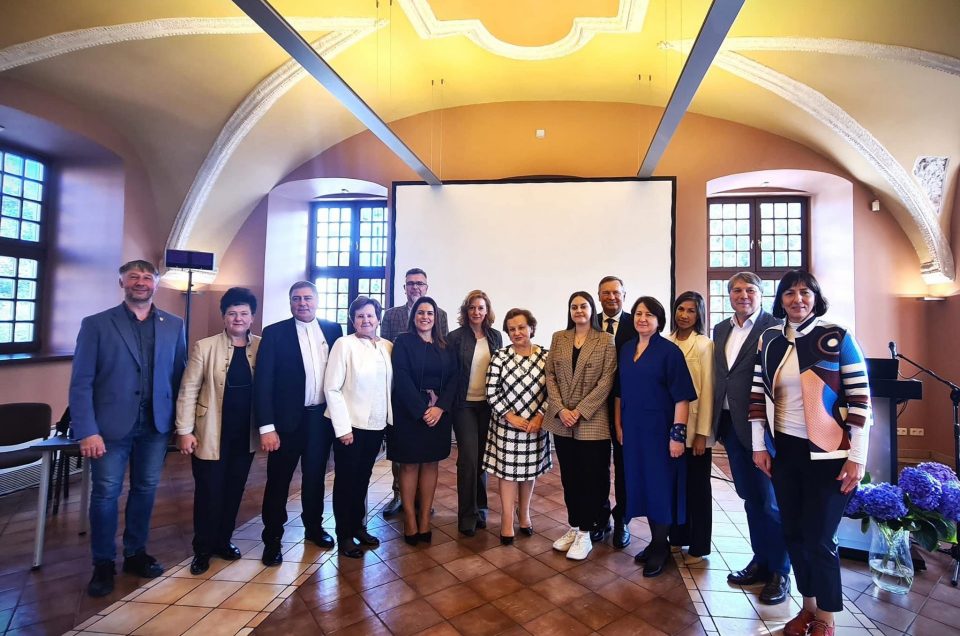
On 5 and 6 October, the international conference to discuss the pilgrimage experience in Lithuania during the last decade was held at the Ecclesiastical Heritage Museum/Archangel Conference and Art Centre in Vilnius (Lithuania). The event was attended by representatives of the European Federation of the Ways of St. James and supported by the signatory of the Act of Restoration of the Independent State of Lithuania, Dr. Laima AndrikienÄ—.

The conference was opened with a significant speech by the Metropolitan Archbishop of Kaunas, Kęstutis Kēvalas and the reception by the Apostolic Nuncio Archbishop Petar Rajič, the chairman of the Commission of Culture of the Republic of Lithuania, Prof. Vytautas Juozapaitis, the Deputy Minister of Culture Rimantas Mikaitis, the representative of the Government of the Republic of Lithuania Diana Varnaitė, and other distinguished guests. The conference was attended by heads of municipalities and council members, representing both Lithuania and various countries.

The conference was attended by the Spanish MEP Francisco José Millán Mon, Chairman of the Interparliamentary Group “European Cultural Heritage, European Cultural Routes and the Way of St. James” in the framework of the presentation which analysed how the Way of St. James in Lithuania is seen in the context of European cultural routes.

Representing Ildefonso de la Campa Montenegro, President of the European Federation of the Pilgrims’ Roads to Santiago, was Ana Rita Dias, Vice-Mayor of Vila Pouca de Aguiar and President of the Portuguese Federation of the Road to Santiago (Portugal), who was accompanied by Manon Luijten, representative of the municipality of South Limburg (Netherlands) and Dr. Laima AndrikienÄ— (Lithuania).

The first decade of the Way of St. James in Lithuania, the achievements of the activity and the experiences in these years, were reviewed by Rima BlikertienÄ—, president of the Association of Friends of the Way of St. James in this country. Algirdas Vrubliauskas, president of the Association of Lithuanian Municipalities, also a member of the European Federation, also participated. The organiser BirutÄ— NenortaitÄ—, who is Vice-President of the Association of Friends of the Way of St. James also participated actively in the conference.

Jorge Martínez-Cava (President of the Spanish Federation of Associations of Friends of the Way of St. James), Marcin Drogorob from the Polish region of Kujawsko-Pomorskie and Beata Sawinska, representative of the city of Torun, members of FECS, as well as Iryna Sobko Vinica, project manager of the Ukrainian Podolica Way, also a member of FECS, spoke about the development of the Way of St. James in the European cultural routes and its technical network.

The conference was enlivened with beautiful Lithuanian folk songs by Milana and NÄ—ja – the young ambassadors of the Way of St. James from OnuÅ¡kis Primary School in Trakai district.


123456
Page 2 of 6


@ European Federation of Saint James Way - Legal notice

We use cookies to ensure that we give you the best experience on our website. If you continue to use this site we will assume that you are happy with it.Ok